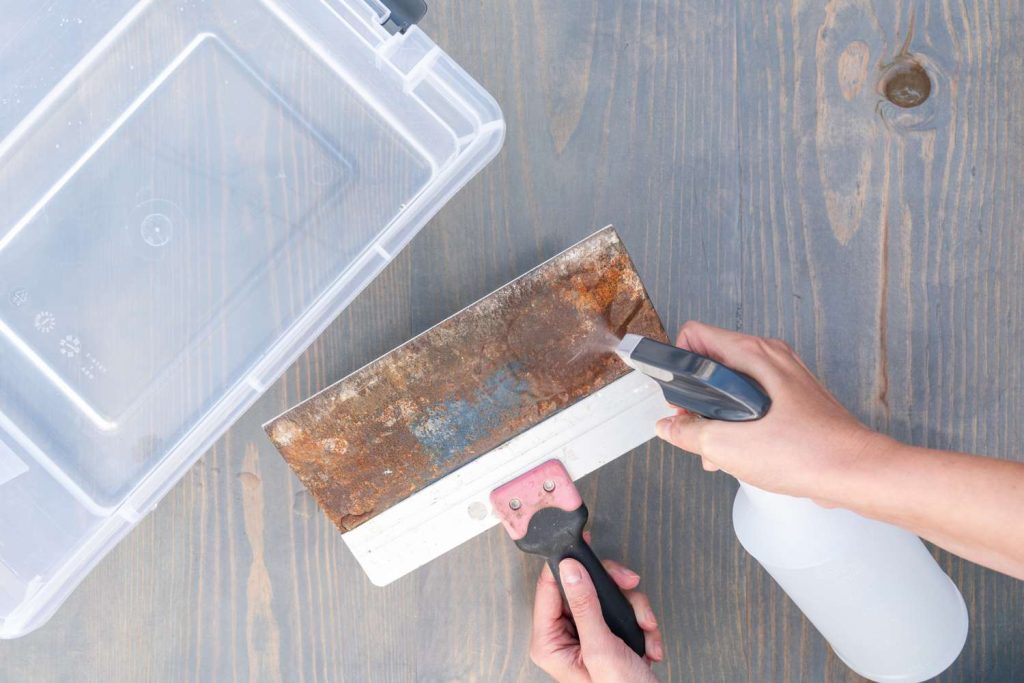
Whether it’s a cast iron pan, winter-worn garden furniture, or vintage tools, rust doesn’t have to mean the end of an item’s life. In most cases, metal can be fully restored with the right approach. For “Removing Rust from Metal“, the best method depends on severity:
- Heavy Corrosion: Specialized commercial removers like Evapo-Rust or even a chemical-free laser removal tool (which has become more accessible for DIYers in 2026).
- Light Rust: A soak in white vinegar for 24 hours followed by a scrub with steel wool.
- Medium Rust: A paste made of baking soda and water left to sit for an hour before being scrubbed away.
This guide is specifically about restoration: bringing corroded metal objects back to life, not just cleaning surface discolouration. The methods here go deeper than a quick vinegar wipe, and the results are worth it.
Step 1: Assess the Damage Before You Start
Not all rust is equal, and starting with the wrong tool wastes time and can damage the metal underneath.
|
Damage Level |
Signs |
Recommended Approach |
|
Surface rust only |
Orange/brown staining, no pitting |
Chemical soak or acid treatment |
|
Flaking rust |
Rust peeling away, slight roughness |
Wire brush first, then chemical treatment |
|
Pitted corrosion |
Holes or divots in the metal surface |
Mechanical removal + filler if decorative |
|
Through corrosion |
Metal is thin, flaking, or has holes |
Structural integrity lost – replacement advised |
Mechanical Removal: When Chemicals Are Not Enough
For flaking or deep rust, start mechanically before applying any chemical treatment. This clears the bulk of the corrosion and gives the chemical remover direct access to the metal.
- Wire brush attachment on a drill: The fastest approach for large surfaces like furniture legs or gate sections.
- Flap disc or grinding wheel: For very heavy rust on thick steel. Use at a low angle to avoid gouging.
- Sandpaper (80-120 grit): For smaller items or intricate shapes where power tools cannot reach.
- Steel wool (grade 0000): For final smoothing after bulk rust is removed.
Always wear eye protection and gloves when working with power tools on rusted metal – rust particles are sharp and can become airborne.
Chemical Removal: Tools, Cast Iron & Precision Parts
For objects with complex shapes, moving parts, or surfaces where scratching is not acceptable, chemical removal is the smarter route.
1. Disassemble the item where possible. Rust remover works best when it can reach all surfaces, and reassembling after restoration is easier than working around components.
2. Submerge the item in Evapo-Rust or a similar chelation-based remover. Avoid phosphoric acid products on cast iron – they can make the surface brittle.
3. Leave for 2-24 hours depending on rust severity. Check periodically – you will see the solution turn dark as it draws out the rust.
4. Remove, scrub lightly with a stiff brush, and rinse with water.
5. Dry immediately and completely – use a heat gun or low oven (200°F / 95°C) for cast iron.
Restoring Painted Metal Surfaces
Garden furniture, filing cabinets, and painted steel shelving develop rust under the paint, which causes bubbling and peeling. Here is how to restore them properly:
1. Sand or scrape away all loose paint around the rusted area. Trying to paint over loose edges will result in peeling within months.
2. Use a rust converter (such as Rust-Oleum Rust Reformer) on any remaining rust. This chemically converts rust into a stable compound that can be painted over.
3. Apply a rust-inhibiting primer to the bare metal area. Two thin coats are better than one thick one.
4. Paint with an exterior-grade or metal paint in your chosen colour, feathering the edges into the existing paint.
5. Seal with a clear topcoat for outdoor items.
Safety Reminders for Chemical Rust Removal
|
Do This |
Avoid This |
|
Work in a well-ventilated area |
Using strong acid removers indoors |
|
Wear nitrile gloves throughout |
Touching rusted metal barehanded |
|
Dispose of used chemical solution carefully |
Pouring rust remover down the drain untreated |
|
Neutralise phosphoric acid residue with baking soda |
Leaving treated metal wet – rust returns fast |
The Final Step Most People Skip
Protecting the metal after restoration is just as important as the removal itself. A piece you have spent hours restoring will start rusting again within days if left bare.
For tools: a thin coat of camellia oil or machine oil wiped on after every use is the gold standard. For structural metal outdoors: a cold galvanising spray provides long-term protection. For indoor decorative pieces: a clear lacquer or wax finish locks out moisture without changing the appearance.