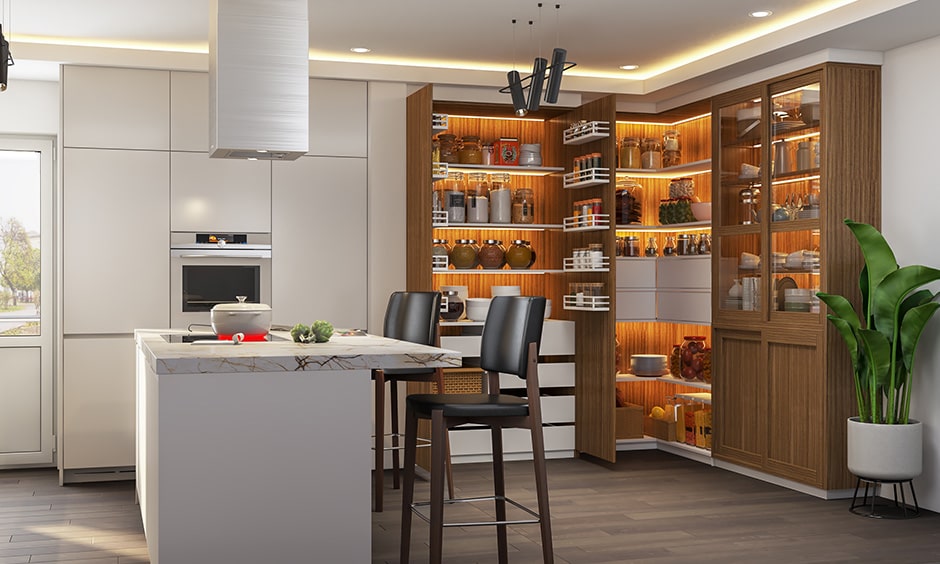
A well-organized pantry genuinely changes how you cook. When you can see and reach everything, meal prep moves faster—most households recover 20-30 minutes of kitchen time each week simply by organizing food storage properly. Exploring different kitchen pantry ideas can help you realize that the best pantry isn’t necessarily the biggest one; it’s the one designed around how you actually shop and cook.
Below are pantry ideas by type and size, so you can find what fits your kitchen – whether you have a dedicated pantry room or just an awkward cabinet in the corner.
Types of Kitchen Pantries
| Pantry Type | Best Kitchen Size | Space Required | Approx. Cost | Key Advantage |
| Walk-In Pantry | Large (900+ sq ft homes) | 4×4 ft minimum footprint | $1,500-$8,000+ | Maximum storage, full visibility |
| Reach-In Closet Pantry | Medium kitchens | 24″-30″ deep closet | $500-$2,500 | Great capacity in narrow space |
| Pull-Out Cabinet Pantry | Small-Medium kitchens | 12″-24″ cabinet width | $200-$1,500 | Space-efficient, no wasted depth |
| Butler’s Pantry | Large open-plan kitchens | Separate room or hallway | $3,000-$15,000+ | Storage + prep zone combined |
| Freestanding Pantry Cabinet | Any size | 18″-36″ floor space | $150-$800 | No renovation required |
| Over-Door Organizer | Very small kitchens | Door space only | $20-$80 | Instant, no installation needed |
Walk-In Pantry: How to Zone It Properly
A walk-in pantry is only as good as its organization. Most poorly used walk-in pantries fail because everything is stored at the same level with no logic. Use this zone system:
- Eye level (most accessible): Everyday items – oils, spices, snacks, cereals, coffee. Things you reach for multiple times a day
- Below eye level (easy reach): Canned goods, jars, dry pasta, rice, legumes. Heavy items belong lower to reduce arm strain
- Top shelves (occasional reach): Bulk extras, backup stock, seasonal items, special occasion serving pieces
- Floor level: Large appliances (slow cooker, air fryer, stand mixer), heavy bags of flour or pet food
- Door back (if applicable): Spice rack, small jars, foil/wrap organizer
Lighting inside the pantry is non-negotiable. A motion-sensor LED strip inside is cheap, easy to install, and completely changes usability – especially in deep shelves.
Small Kitchen Pantry Alternatives
No room for a walk-in? These solutions add serious pantry function without a renovation:
- Pull-out drawer inserts: Retrofit existing lower cabinets with pull-out shelves – every inch is accessible and visible from the front. IKEA and Rev-A-Shelf make excellent kits
- Tall cabinet conversion: A standard floor-to-ceiling cabinet with pull-out shelving inside works almost as well as a walk-in for dry goods
- Over-door racks: The back of a standard door can hold 50-80 spice jars, condiments, or foil rolls with a simple mounted organizer
- Counter-height rolling cart: A baker’s rack or kitchen cart with shelving adds open pantry storage and can roll out of the way
- Drawer-in-a-drawer inserts: Deep kitchen drawers can hold far more when tiered inserts are used – spice jars, small cans, packets
Organization Systems That Actually Stay Organized
Most pantry organization fails because the system is beautiful but impractical. Here’s what actually holds up:
- Clear containers for dry goods (flour, sugar, rice, oats, pasta): Visibility is everything – if you can see it, you use it before it expires. Square containers use space more efficiently than round
- Uniform baskets for categories: One basket for snacks, one for baking, one for sauces. Baskets let you pull the whole category out at once
- Labels everywhere: Label shelves, not just containers – this maintains the system when others put things away
- First-in, first-out rotation: New stock goes to the back; older items come forward. Takes 10 seconds, prevents expired food waste
Shelf Spacing: Getting the Heights Right
| Shelf Position | Recommended Spacing | What Goes Here |
| Top shelf | 12″-14″ gap | Rarely used items, bulk backup stock |
| Upper-middle shelves | 10″-12″ gap | Tall bottles, cereal boxes, oil, vinegar |
| Middle shelves (eye level) | 8″-10″ gap | Everyday items – canned goods, spices, snacks |
| Lower-middle shelves | 10″-12″ gap | Jars, heavy cans, appliance accessories |
| Bottom shelf | 14″-18″ gap | Large appliances, bulk bags, pet food |
Making the Pantry Look Good (Not Just Functional)
A pantry that looks appealing is one you’ll maintain. Small aesthetic choices make a big difference:
- Wallpaper on the back wall of a walk-in: Visible through open shelving, it adds personality without being seen from the main kitchen
- Chalkboard or glass pantry door: Instantly signals organization; you can write a grocery list or meal plan on the door
- Consistent container sets in one color family: Doesn’t have to be expensive – consistency is what creates the visual calm
- Under-shelf lighting: LED strips under each shelf make every level visible and look far more intentional
First Steps Before You Buy Anything
This is where most people waste money – buying baskets and containers before they know what they have and need.
- Step 1: Empty the pantry completely and sort everything into categories on the counter
- Step 2: Discard anything expired, stale, or that you genuinely won’t cook with
- Step 3: Measure your shelf depths and heights before buying any organizer
- Step 4: Group what remains by category and count how much space each category needs
- Step 5: Only then buy containers, baskets, and dividers – specific to what you have
Final Thought
A great pantry isn’t about having more space – it’s about knowing exactly where everything is. Even a single organized shelf beats a full walk-in where nothing has a home. Start with one zone, get it right, and expand from there.